Broken Bodies, Bigger Feelings: The Hidden Logic Behind Exaggerated Character Design
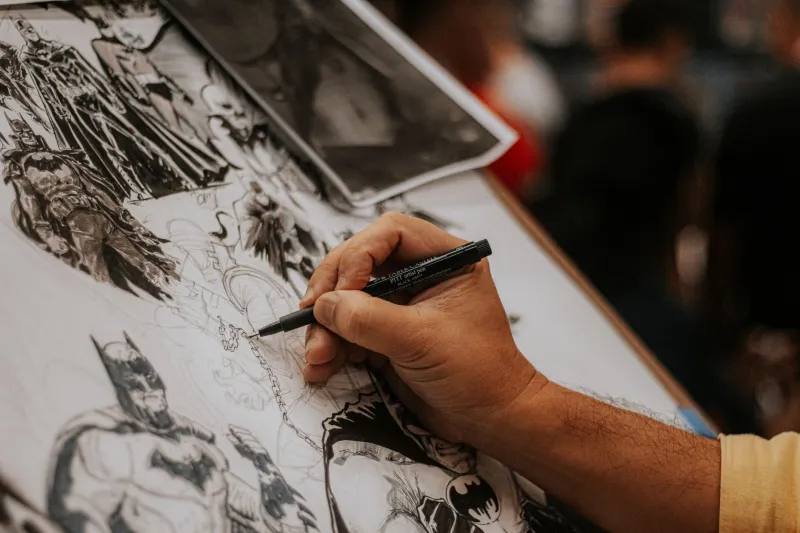
Here's a weird thing to sit with: a character with dinner-plate eyes, a head the size of a basketball, and legs like spaghetti noodles can make you feel more emotionally connected than a portrait painted with surgical anatomical precision. That shouldn't make sense. And yet, if you've ever teared up watching a Pixar short or felt genuine attachment to a cartoon character whose proportions belong in a fever dream, you already know it's true.
So what's actually going on? Why does exaggeration — intentional, sometimes absurd distortion — land harder than realism? Turns out, there's a fascinating collision of psychology, neuroscience, and pure artistic instinct at work. And understanding it doesn't just make you a smarter viewer. It makes you a better artist.
Your Brain Is Running a Shortcut Program
Let's start with the basics. Human brains are pattern-recognition machines, and we've been wired since infancy to pick up on certain visual cues that signal emotion, intent, and trustworthiness. Big eyes read as young, vulnerable, and open — think puppies, babies, and basically every character in a Studio Ghibli film. It's not a coincidence that artists lean into that. They're essentially hacking a hardwired response.
This concept connects to something called the "cute response" or kindchenschema, a term coined by ethologist Konrad Lorenz back in the 1940s. He noticed that babies — human and animal alike — share specific physical features: large foreheads, round cheeks, big eyes relative to the face. These features trigger caregiving instincts. Artists figured this out intuitively long before scientists put a name to it. Exaggerating those features in character design doesn't just make something look cute. It makes us care about it automatically.
But it goes beyond cute. Exaggeration also clarifies emotion in a way that realistic faces sometimes can't. A subtly furrowed brow on a photorealistic face can be ambiguous — is the character annoyed? Concentrating? Tired? A cartoon character with brows angled at 45 degrees and a jaw that drops to the floor? Zero ambiguity. The emotion is broadcast, not whispered.
The Uncanny Valley Runs the Other Direction, Too
Most people have heard of the uncanny valley — that creepy, unsettling feeling you get when something looks almost-but-not-quite human. Hyper-realistic CGI characters often fall into it. But here's the flip side that doesn't get talked about nearly enough: stylization sidesteps the valley entirely.
When a character is clearly, confidently not trying to be real, your brain relaxes its scrutiny. You stop looking for the flaws. You stop comparing it to actual human anatomy. Instead, you engage with it on its own terms — as a visual language that communicates feeling and personality rather than biological accuracy. The further a design leans into its own stylistic logic, the more your brain accepts it as internally consistent and, paradoxically, more believable within its world.
That's a huge deal for character artists. It means you have permission — real, psychologically backed permission — to break the rules. The question isn't "is this anatomically correct?" It's "does this distortion serve the character's emotional truth?"
Exaggeration as Emotional Amplifier
Think about how a great caricature works. A skilled caricaturist doesn't just randomly stretch a face — they identify the most essential features of a person and push those to the extreme. The result is something that often feels more "them" than a photograph does. It's the same principle at play in character design.
When an artist gives a villain impossibly angular cheekbones and a silhouette that looks like a knife, they're not being lazy about anatomy. They're translating personality into shape language. When a gentle giant character has soft, rounded everything — round eyes, round shoulders, round hands — that roundness is doing emotional work. It communicates safety before the character says a single word.
This is why animation studios spend enormous amounts of time on silhouette reads. A character should be instantly recognizable and emotionally legible even as a flat black shape. Realistic human proportions, with their relative uniformity, don't give you much to work with there. Exaggeration does. It creates visual contrast, personality shorthand, and instant emotional cues all at once.
When Impossible Physics Actually Makes Sense
Cartoon physics — characters stretching like rubber, limbs extending beyond any biological limit, bodies flattening and reinflating — looks chaotic. But it follows its own internal logic, one that's deeply tied to how we experience emotion physically.
When you're excited, you feel expansive. When you're scared, you feel small and contracted. When something hits you emotionally, it can feel like a punch. Cartoon physics externalizes those internal physical sensations. A character who stretches their arms wide open to embrace someone is visualizing the feeling of wanting to hold someone close. A character who shrinks to the size of an ant under pressure is showing us the lived experience of feeling overwhelmed.
In that sense, impossible cartoon physics isn't a departure from reality — it's a more honest representation of emotional reality than any anatomically correct depiction could manage. The body in cartoons behaves the way feelings actually feel, not the way muscles and tendons actually work.
What This Means for Your Own Work
If you've been grinding away trying to nail perfect proportions, this isn't an argument to stop studying anatomy. Understanding the rules is what lets you break them with intention rather than accident. The artists who create the most emotionally resonant stylized characters — whether it's the crew behind Arcane, the designers at Cartoon Network, or indie illustrators blowing up on social media right now — know anatomy well enough to know exactly which parts to push and which to preserve.
The real takeaway is this: exaggeration isn't a shortcut or a stylistic crutch. It's a deliberate tool for communicating emotional truth. When you give a character oversized hands, you're making a choice about what that character does in the world. When you stretch a face into an expression that no real human could physically make, you're reaching past the surface into something that feels more honest than a photograph.
Art that leaps off the screen doesn't do it by looking exactly like the world we live in. It does it by showing us how that world feels — and sometimes that requires a head three times too big and eyes the size of dinner plates to get the point across.
Next time you're designing a character and something feels stiff or lifeless, ask yourself: where's the emotion, and how can the proportions carry more of it? You might be surprised how much a little intentional distortion can say.