When the Drawing Tablet Goes Dark: Mapping the Stages of a Creative Slump and Finding Your Way Back
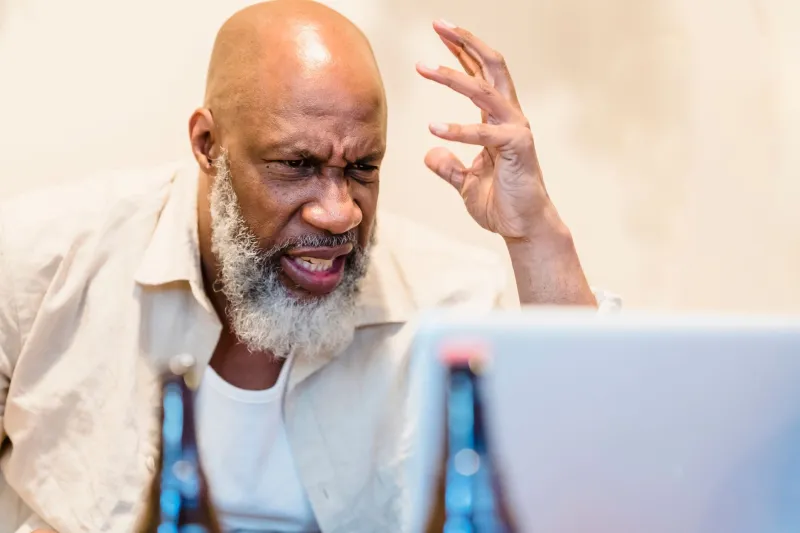
There's a specific kind of dread that settles in when you sit down at your desk, open your drawing software, stare at a blank canvas for twenty minutes, and then quietly close your laptop and go watch TV instead. It doesn't feel dramatic. It just feels... flat. Like the part of your brain that used to hum with ideas has gone on an unannounced vacation and didn't leave a forwarding address.
Creative slumps are one of the most universal experiences in the digital art world, and somehow also one of the most isolating. You scroll through your feed and everyone else seems to be posting finished pieces, process videos, and glowing commission announcements. Meanwhile, you haven't touched your stylus in two weeks and you're not entirely sure you even want to.
Here's the thing: that silence has a shape. And once you can recognize it, it stops feeling like personal failure and starts feeling like something you can actually work with.
The Difference Between a Block and Burnout
Not all creative dry spells are created equal, and treating them the same way is a fast track to making things worse.
A creative block is usually situational. You want to make something, but you can't figure out what or how. There's frustration, maybe some restless energy. You might find yourself opening and closing reference folders, sketching half a pose before scrapping it, or doom-scrolling through your own old work looking for something to reignite a spark. The desire is there — it's just stuck.
Burnout feels different. It's quieter and heavier. The desire itself goes missing. You might not even feel frustrated because frustration requires caring, and caring has become the exhausting part. This is the version that often hits artists who've been pushing hard — grinding commissions, chasing posting schedules, trying to build an audience while also trying to actually make art they love. Your brain isn't blocked. It's depleted.
Mistaking burnout for a block and trying to "push through it" with productivity hacks is like trying to sprint on a sprained ankle. You'll do more damage.
The Recognizable Stages (Even If Nobody Talks About Them)
Creative slumps tend to move through a pretty consistent pattern, even if the timeline varies wildly from person to person.
Stage one is the slow fade. Output drops a little. You tell yourself you're just busy. The ideas still come, but following through feels harder than usual. Easy to miss entirely.
Stage two is the comparison spiral. You start measuring your current output against your best work, or worse, against other artists. Nothing you make feels good enough to post. You might start a dozen things and finish none of them. The internal critic gets loud.
Stage three is avoidance. Opening your art program starts to feel vaguely threatening. You find other things to do. Cleaning your desk becomes weirdly urgent. The longer you avoid it, the more loaded the act of sitting down to draw becomes.
Stage four — and this is the one people don't talk about enough — is the guilt loop. You feel bad about not drawing. Feeling bad makes drawing feel even harder. Not drawing makes you feel worse. Repeat indefinitely until something breaks the cycle.
Recognizing which stage you're in matters because the exit strategies are genuinely different.
What Actually Helps (And What Sounds Helpful But Doesn't)
Let's get the bad advice out of the way first: "just draw every day no matter what" is not a universal cure. For someone in stage one, a consistent low-stakes practice can absolutely help. For someone in full burnout, forcing output is just adding pressure to an already overloaded system. The goal isn't to perform productivity. The goal is to actually recover.
Give yourself a real permission slip to stop. Not "I'll take a few days off and feel guilty the whole time" — an actual deliberate break. Tell yourself you're not drawing this week. On purpose. The psychological difference between "I failed to draw" and "I chose not to draw" is enormous.
Consume without the pressure to produce. Watch movies. Read comics. Play games with interesting visual design. Go to a gallery if there's one near you. Fill the tank without demanding output from it. Your brain needs input as much as it needs output, and a lot of slumps happen when that ratio gets way out of balance.
Shrink the stakes dramatically. When you do come back to drawing, don't open a canvas with the goal of making something post-worthy. Open a sketchbook — physical or digital — and make something deliberately bad. Draw your hand. Draw your coffee cup. Draw a character from memory with your non-dominant hand. The point is to break the association between drawing and performance.
Separate the art from the audience. A huge driver of creative burnout for online artists specifically is the way posting and making have become fused together. If every drawing is implicitly a piece of content, every blank canvas becomes a deliverable. Try making something with zero intention of sharing it. Ever. See how that changes the feeling.
Talk to someone who gets it. This sounds soft but it's genuinely underrated. Artist communities — Discord servers, local life drawing groups, even just a DM with a friend who also makes stuff — can break the isolation that makes slumps so much worse. You don't have to have a breakthrough conversation. Just not being alone with it helps.
The Productivity Trap Hiding Inside the Cure
Here's the sneaky thing about creative slumps: the internet's answer to them is almost always more structure, more systems, more accountability. Content calendars. Pomodoro timers. Habit trackers. And look — for some people, some of the time, that stuff genuinely works.
But there's a version of "fixing your creative slump" that is just burnout wearing a productivity costume. If your recovery plan involves optimizing your workflow and scheduling your inspiration, you might be solving the wrong problem. Sometimes the most radical thing a working artist can do is decide that output is not the metric that matters right now.
Creativity isn't a machine that runs on discipline alone. It's more like a relationship — with your own imagination, your own taste, your own weird obsessions. And like any relationship, it needs space, not just effort.
Coming Back Doesn't Have to Be a Comeback
There's a cultural script around creative slumps that frames the return as a triumphant moment — the artist who went dark for six months and came back with their best work yet. And sometimes that happens. But a lot of the time, coming back just looks like opening your tablet on a Tuesday afternoon and drawing something small and kind of mediocre, and that being completely okay.
You don't owe anyone a comeback arc. You don't owe the algorithm a dramatic return post. You just have to find your way back to the thing that made you want to draw in the first place — before the followers, before the commissions, before you knew what a posting schedule was.
That version of you is still in there. They're just resting.