Better Skills, Worse Vibes: The Painful Truth About Redraws That Fall Flat
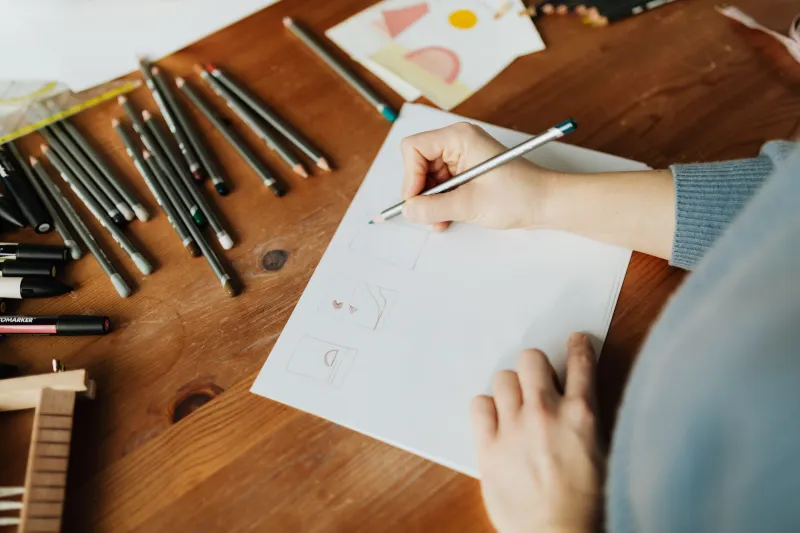
There's a specific kind of frustration that only artists know. You've put in the hours. You've studied anatomy, drilled perspective, watched a hundred tutorials, and genuinely, measurably improved. So you open up that old drawing — the one everyone loved, the one that still lives rent-free in your brain — and you decide to give it the upgrade it deserves.
And then the finished piece just... sits there. Technically cleaner. Anatomically correct. And somehow completely dead.
Welcome to the redraw paradox. It's real, it's common, and honestly, it says more about what art actually is than any tutorial ever could.
The Myth of "Better" in Art
We talk about artistic growth like it's a straight upward line — more skill equals better work, full stop. But that framing misses something important. Technical ability and emotional resonance aren't the same thing, and they don't always move together.
Your earlier drawings, the ones with wonky proportions and rough linework, were made by a version of you who wasn't second-guessing every stroke. You drew fast, you drew instinctively, and the result carried a kind of raw energy that's genuinely hard to manufacture once you start thinking too hard about what you're doing.
That old fan art of your favorite character? It probably had loose, confident lines because you didn't know enough to be scared yet. The new version has tight, careful lines because now you know exactly what "wrong" looks like — and you're working overtime to avoid it.
Overthinking Is the Real Villain Here
Here's what actually happens during a lot of redraws: you stop drawing the character and start solving a technical problem. Every decision becomes a question. Is the jaw too wide? Is that foreshortening working? Does this expression read clearly enough?
Those are valid questions. But when they crowd out the original feeling — the reason you loved drawing this character in the first place — the result ends up looking like a reference sheet instead of a piece of art.
There's a term in psychology called "paralysis by analysis," and it applies hard to visual art. The more you know, the more you can see that's potentially wrong, and the more cautious you become. That caution shows up in the work. Stiff poses. Overly symmetrical faces. Expressions that are technically correct but feel weirdly neutral.
Your old self didn't have enough knowledge to be cautious. Turns out, that was kind of a superpower.
What You're Actually Losing (And Why It Matters)
The magic in early work often lives in the imperfections. A slightly exaggerated jaw, a pose that breaks the rules of anatomy but sells the attitude perfectly, an eye that's just a little too big and makes the character look more expressive because of it. These "mistakes" weren't random — they were your instincts making decisions that your conscious brain would have overridden if given the chance.
When you redraw with full technical awareness, you correct those instincts. And sometimes what you're correcting is actually the soul of the piece.
This is especially true in fan art, where the emotional connection to the character is doing a ton of heavy lifting. People don't fall in love with technically perfect drawings. They fall in love with drawings that feel like the artist got the character — and that feeling often comes from choices that don't survive a rigorous anatomy check.
How to Redraw Without Losing the Plot
None of this means you should stop trying to improve or avoid redraws entirely. It just means approaching them with a little more strategic awareness.
Start by studying the original, not correcting it. Before you touch a new canvas, spend real time looking at what made the old piece work. Was it the energy in the linework? A specific expression? The way the character's weight was distributed? Write it down if you have to. That list is your brief — everything on it needs to survive the redraw.
Sketch loose before you commit. A lot of redraws go wrong in the planning stage, when artists are already thinking in "final piece" mode. Do five or six rough thumbnails first, specifically trying to capture the feeling of the original rather than improve on its technical execution. You can refine later. Get the vibe first.
Give yourself permission to keep the weirdness. If the original had an exaggerated silhouette or an expression that bends the rules, don't automatically smooth it out just because you know better now. Ask whether that quirk is part of the character's identity. If it is, protect it intentionally.
Redraw with the original open. It sounds obvious, but a lot of artists work from memory when they redraw older pieces, which means they're reconstructing their idea of the character rather than honoring the specific version that resonated. Keep the original visible and treat it as a collaborator, not just a reference.
Finish something fast, then refine. Set a time limit on your first pass — something aggressive, like an hour — and get a complete rough version down before you start polishing. This forces your instincts to stay in the driver's seat and prevents the overthinking spiral from starting before you even have a foundation.
The Bigger Picture
There's something genuinely humbling about realizing that your best work might not be your most technically accomplished work. It challenges the whole narrative we build around artistic growth — the idea that practice is always moving you closer to some ideal version of your art.
Maybe the goal isn't to make your old drawings technically better. Maybe it's to figure out how to carry the energy of those early pieces forward while adding the craft you've built up since. That's a much harder problem than just leveling up your anatomy skills, but it's also the more interesting one.
The artists whose redraws consistently hit — the ones where you can feel the love for the character in every line — aren't just applying better technique. They're actively protecting something intangible. They know what made the original special, and they treat that knowledge like the most important tool in their kit.
Your skills are an asset. But so is the instinct that made people care about your work before you knew what you were doing. The real challenge is learning how to use both at the same time.